
About the Organization
Power of Two is a homegrown community organization based in New York City with a mission to nurture the inherent potential in every child and family—equipping them with the tools to transform their own lives and strengthen their communities. Power of Two was founded to address the reality that children born into marginalized communities to families that have themselves experienced trauma are often exposed to prolonged toxic stress and are therefore at higher risk for negative effects on learning, behaviour, and health across their lifespan. In our focal communities of Brownsville, Brooklyn and the South Bronx, long histories and current realities of systemic racial and economic discrimination and neglect have contributed to cycles of intergenerational trauma. We address the traumatic impacts of racial and social inequities on caregivers and children by partnering directly with families to: deliver the evidence-based Attachment and Biobehavioral Catch-up (ABC) parent coaching program, apply our on-the-ground knowledge of family needs and community dynamics to connect families to additional services, and contribute to broader community advocacy initiatives.
The Problem
Power of Two was severely impacted in its ability to partner with families as a result of the initial lockdown instituted at the start of the COVID-19 pandemic. As a home visiting organization, COVID-19 posed immense challenges to our program continuity, as traveling to families’ homes could put our team and the families they visited at risk. We knew that the rising number of cases and deaths, financial havoc, social isolation, and uncertainty created by the COVID-19 pandemic would intensify parents’ anxiety and stress levels, and we wanted to find a way to counter the impact. We worked closely with our partners at the University of Delaware to adapt the ABC program for virtual delivery. Prior to pivoting from in-person to virtual program delivery, we first focused on understanding the accessibility of our virtual model. After conducting a tech needs assessment in Brownsville and the South Bronx, we found that the digital divide is real. Our findings showed that close to 40% of the families in our communities lacked access to tech equipment and/or broadband. These findings were very similar to those outlined by the Pew Research Center that found that roughly eight-in-ten white people (82%) report owning a desktop or laptop computer, compared with 58% of Black and 57% of Latinx individuals. There are also substantial racial and ethnic differences in broadband adoption, with white families being more likely than either Blacks or Latinx families to report having a broadband connection at home.
The Solution
To remedy the digital divide and issues related to access, we applied for support to our institutional partners to help us purchase the equipment necessary that would give families direct access to iPads and WIFI connectivity.
As part of that effort, we also:
- Created user manuals and tech guides to help build families’ familiarity with iPads, Wifi, Zoom, navigating online platforms, etc.
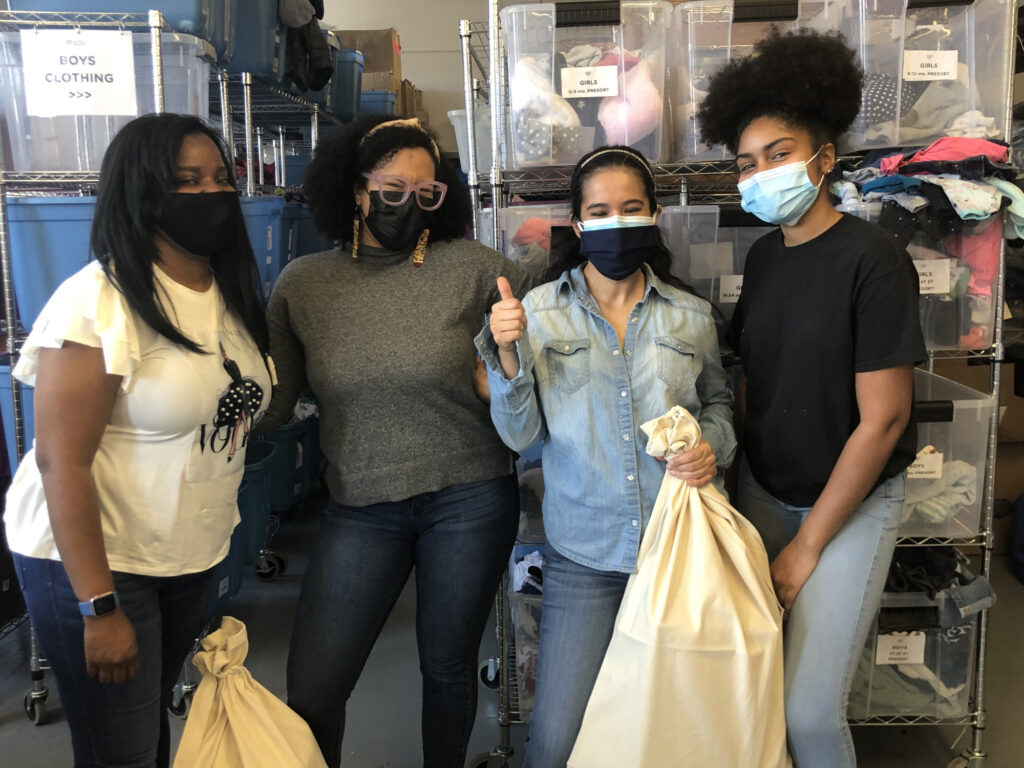
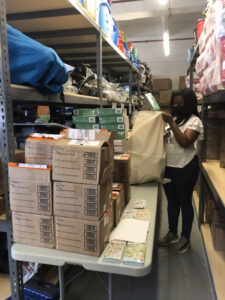
- Responded to their immediate needs by providing a 2-month supply of baby essentials (diapers, wipes, and formula) and access to groceries to help alleviate some of the financial burden that families were experiencing.
- Compiled a comprehensive Community Resource Guide to ensure that families were able to connect with any additional services resources they needed.
As we met with families over our Zoom Health platform, we not only delivered the TeleABC program, but also shared calming strategies to help parents cope with the emotional effects of the pandemic and to support their children through this time of anxiety and isolation. With redoubled efforts on the part of our Community Resource Specialists, who engaged in additional check-in calls with families, we helped to holistically meet family needs through connections with health care, mental health services, employment and housing assistance, and food and financial supports.
The Results
We are happy to note that the programmatic impacts of Tele ABC have mirrored the positive family outcomes of the in-person model, providing an effective long-term solution for making the program accessible to families. Because of the effectiveness of our approach over the past year and a half, we plan to continue a hybrid model of programming. Currently, 70% of families participate in Tele ABC, while 30% of families participate in the program in person.